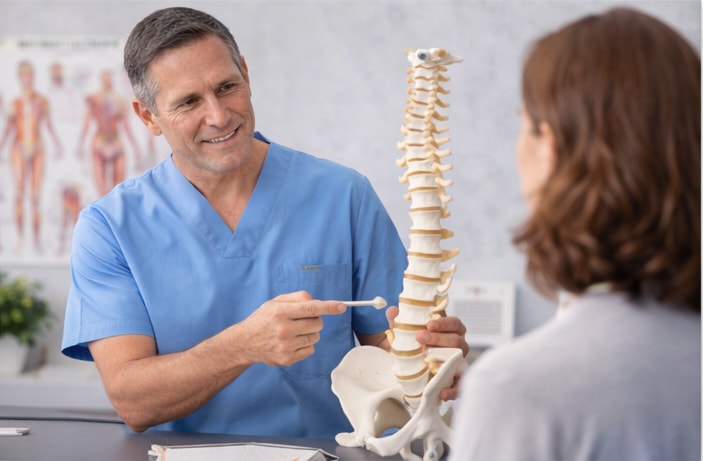
The Role of Spinal Discs
Between each vertebra sits an intervertebral disc, a specialized structure designed to absorb forces, distribute load, and support movement. Discs consist of a resilient outer layer surrounding a softer, gel-like center. Together, these components allow the spine to remain both flexible and remarkably strong under daily physical demands.
Because discs are constantly involved in movement and load-bearing, they naturally adapt over time. Age-related changes, repetitive stress, or injury may influence disc behavior without necessarily producing immediate symptoms. Our disc injury condition page covers the range of disc-related presentations we commonly see in clinical practice.
Disc Changes & Symptoms
Terms such as bulging, protruding, or herniated discs are frequently used to describe structural variations observed through imaging or clinical assessment. Importantly, many disc changes are asymptomatic. Research has shown that a significant portion of adults may present with disc irregularities while experiencing little to no discomfort.
Symptoms typically arise when disc changes interact with surrounding tissues, particularly nerve structures. This interaction may contribute to localized discomfort, stiffness, radiating sensations, numbness, or mobility limitations. The presence and intensity of symptoms vary widely between individuals.
When Back Pain Feels Different
While muscular discomfort often improves with rest and time, symptoms associated with spinal irritation may behave differently. Patients may notice pain that lingers, fluctuates, radiates, or responds inconsistently to typical self-care strategies. These variations do not automatically indicate a severe condition, but they may warrant a more thorough evaluation.
A clinical assessment helps differentiate between common mechanical contributors and guides appropriate management strategies.
Back discomfort can arise from multiple interacting factors. Understanding the underlying contributors is often the first step toward meaningful improvement.
If you have questions about persistent back pain or mobility changes, our team is always happy to help.