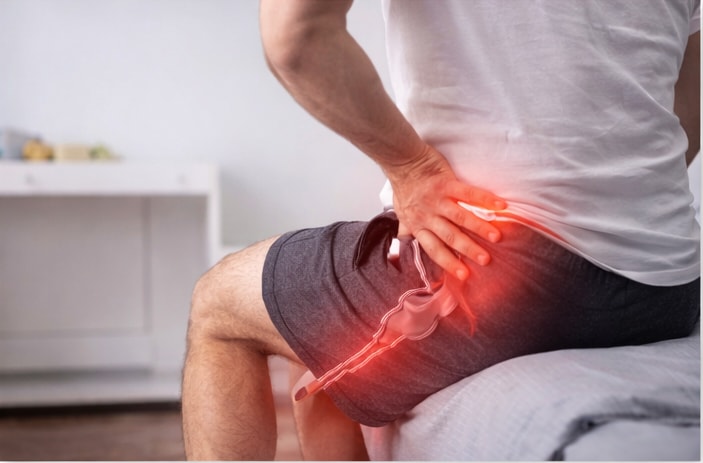
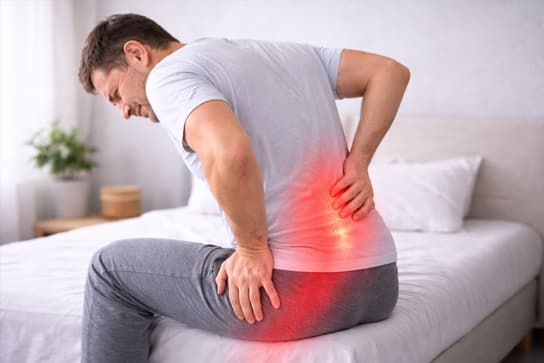
What Is Sciatic Pain?
The sciatic nerve is the largest nerve in the body, originating from nerve roots in the lumbar spine and traveling through the pelvis, buttock region, and into the lower extremity. When this nerve or its contributing structures become irritated, compressed, or inflamed, symptoms commonly described as sciatica may develop.
Importantly, sciatica refers to a pattern of symptoms rather than a specific diagnosis. Multiple mechanical or structural factors may contribute to sciatic presentations.
Common Sciatic Symptoms
Sciatic symptoms frequently involve pain radiating into one leg, often accompanied by tingling, burning sensations, or altered sensitivity. Some individuals report weakness, heaviness, or difficulty with certain movements depending on the severity and nature of nerve involvement.
Symptoms are often influenced by mechanical loading. Prolonged sitting, bending, coughing, sneezing, or sudden positional changes may temporarily intensify discomfort.
Mechanical & Neurological Influences
Sciatic pain commonly reflects irritation involving nerve roots, surrounding joints, or adjacent soft tissues. Disc-related changes, joint mobility restrictions, muscular tension, and movement mechanics may all play contributing roles.
Clinical evaluation helps differentiate these factors and guide appropriate management strategies.
Treatment Considerations
Conservative care approaches are frequently considered for sciatic presentations. Chiropractic assessment typically focuses on joint mobility, movement quality, and mechanical contributors that may influence nerve irritation.
Treatment strategies vary based on individual findings and symptom characteristics. Care recommendations are guided by clinical evaluation, patient comfort, and response to treatment.
When to Seek Evaluation
Persistent radiating pain, progressive weakness, or symptoms that significantly interfere with daily activities may benefit from clinical assessment. Identifying contributing mechanical factors often helps guide appropriate care decisions.
If you have questions about sciatic leg pain or treatment options, our team is always happy to help. You can also visit our sciatica and radiating leg pain for a more detailed overview.