Common Headache Types
Recognizing common headache presentations can help clarify symptom experiences and guide appropriate management.
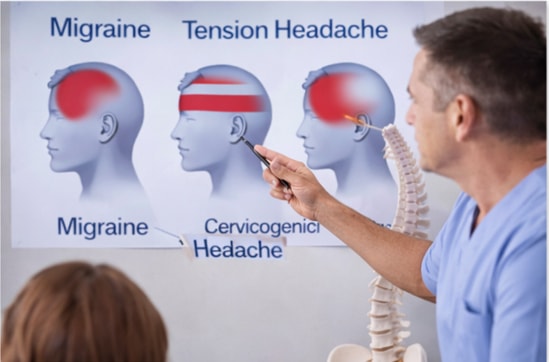
Tension-type headaches are among the most frequently reported presentations. Patients commonly describe a dull, pressing, or tightening sensation often affecting both sides of the head. Symptoms may range from mild to moderate intensity and can persist for varying durations. Muscular tension, postural strain, stress, and prolonged static positions are frequently associated contributors.
Migraine headaches typically involve a more complex symptom pattern. Individuals may experience moderate to severe pain often described as pulsating or throbbing, sometimes accompanied by nausea or heightened sensitivity to light and sound. Some presentations include neurological phenomena such as visual disturbances or sensory changes, commonly referred to as aura. Migraine experiences vary widely in frequency and severity.
Cluster headaches are characterized by intense, localized pain frequently centered around one eye or along one side of the head. Episodes may occur in cyclical patterns and are sometimes accompanied by tearing, nasal congestion, or restlessness.
Common Contributors & Triggers
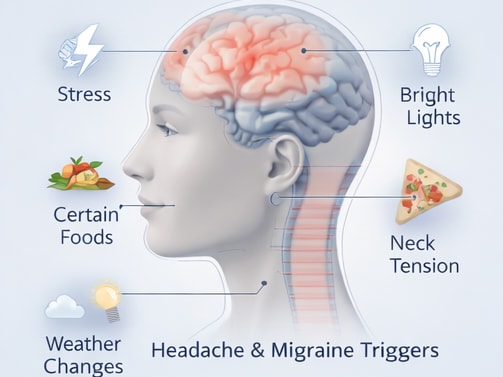
Headaches are rarely caused by a single factor. Environmental stimuli, physiological responses, and mechanical influences frequently interact. Common contributors may include stress, fatigue, dehydration, blood sugar fluctuations, sensory triggers, and muscular tension.
Mechanical factors involving the cervical spine, posture, and surrounding musculature often play a meaningful role, particularly in tension-type headaches. Prolonged sitting, sustained screen use, and repetitive postures commonly contribute to these patterns.
Prevention & Movement Considerations
While not all headaches can be prevented, certain habits may help reduce frequency or intensity. Regular movement, postural variation, and minimizing sustained muscular tension often influence symptom patterns.
Simple strategies such as changing positions periodically, maintaining hydration, and addressing repetitive tension behaviours like jaw clenching or sustained forward head posture may help reduce mechanical strain over time.
Chiropractic Care & Headache Management
Chiropractic evaluation commonly considers joint mobility, cervical spine mechanics, muscular tension, and postural influences. Treatment approaches often emphasize restoring mobility, improving movement quality, and reducing the mechanical contributors associated with tension patterns.
Because headache presentations vary widely, care strategies are guided by individual assessment and symptom characteristics rather than a uniform treatment approach.
When to Seek Evaluation
Headaches that become frequent, progressive, or disruptive may benefit from professional evaluation. Clinical assessment can help identify contributing factors and appropriate management strategies tailored to individual presentation and history.
If you have questions about headache patterns or symptom management, our team is always happy to help. You can also visit our headaches and migraines to learn more about how chiropractic care may help.