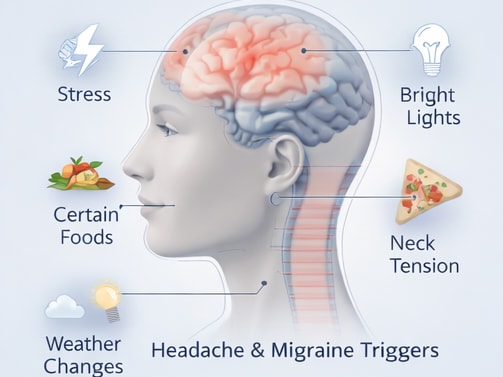
Common Headache Contributors
Headaches may involve multiple influences rather than a single cause. Lifestyle factors, sleep patterns, hydration, stress, muscular tension, postural strain, and environmental triggers frequently interact.
Mechanical contributors involving the cervical spine and surrounding musculature commonly coexist with tension-type headaches, particularly for individuals exposed to prolonged sitting or sustained screen use. The forward head posture and sustained muscular loading that accompany desk work are among the most common postural factors we see alongside recurrent headache patterns. Our article on the sitting epidemic explores how sedentary habits affect the cervical spine and surrounding structures in more detail.
Movement & Postural Strategies
Sustained static postures often contribute to muscular tension patterns. Introducing regular movement intervals, varying positions, and maintaining postural awareness may help reduce accumulated mechanical strain.
Gentle stretching, mobility-focused movement, and minimizing prolonged forward head positioning frequently support improved comfort.
Tension & Habitual Influences
Jaw clenching, teeth grinding, and sustained muscular tension may also influence headache patterns. Awareness of these behaviors often helps reduce unnecessary strain on surrounding structures.
Hydration, sleep consistency, and recovery habits commonly play supportive roles.
Chiropractic Care & Headache Management
Chiropractic evaluation typically considers joint mobility, movement quality, postural influences, and muscular tension patterns. Cervical joint restrictions, upper thoracic mobility limitations, and suboccipital tension are common findings in patients presenting with recurrent headaches. Some patients report improvement in headache frequency or intensity when these mechanical contributors are addressed. For a broader look at headache types and how chiropractic care may help, visit our article on headaches, triggers, and chiropractic care.
When to Seek Clinical Evaluation
Headaches that become persistent, increase in frequency, or significantly interfere with daily activities may benefit from clinical assessment. Identifying contributing factors often helps guide appropriate management decisions.
If you have questions about headaches or symptom patterns, visit our headaches and migraines page or contact our team directly.