What Is TMJ?
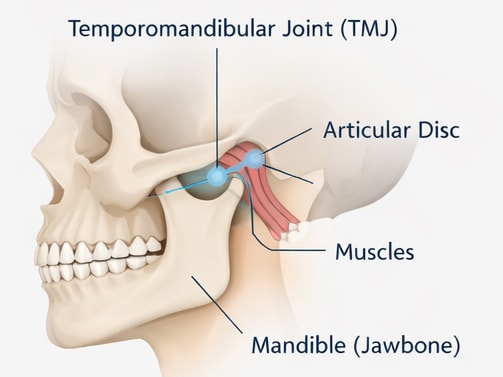
Temporomandibular joint (TMJ) disorders refer to a group of conditions affecting the joint connecting the jaw to the skull, along with the surrounding musculature and supporting structures. The TMJ is one of the most frequently used joints in the body, involved in chewing, speaking, and swallowing, which means even mild dysfunction can have a noticeable impact on daily comfort.
Symptoms vary widely between individuals, may fluctuate with stress levels and jaw loading, and often develop gradually rather than from a single event.
Common TMJ Symptoms
Patients commonly report jaw discomfort, clicking or popping sensations, muscular tension around the jaw or temple, and difficulty opening or closing the mouth comfortably. Some experience intermittent locking, where the jaw hesitates or catches through its range of motion.
Because the jaw, cervical spine, and surrounding musculature function in close coordination, symptoms often extend beyond the joint itself. Headaches, facial tension, and ear-related sensations such as fullness or ringing are frequently reported alongside jaw symptoms. This overlap can make TMJ presentations easy to misattribute to other causes, which is one reason clinical evaluation tends to be more useful than self-diagnosis.
Contributing Factors
TMJ symptoms typically involve more than one contributing factor. Joint mechanics, muscular tension patterns, habitual clenching or grinding (particularly during sleep), postural strain, and stress-related tension are common influences. Previous trauma to the jaw or head, including whiplash-type injuries following a collision, can also contribute to TMJ symptom development in some individuals.
Prolonged forward head posture and sustained desk positioning alter the mechanical relationship between the cervical spine and the jaw, which may create or maintain tension in the muscles that support TMJ function. Identifying which of these factors are most relevant in a given presentation helps direct care more precisely.
Chiropractic Care & TMJ
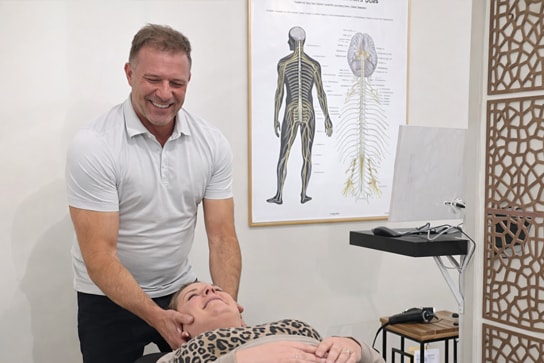
Chiropractic assessment commonly considers jaw mechanics, cervical spine mobility, muscular tension, and the relationship between head position and jaw loading. Because TMJ symptoms often have a cervical component, improving neck mobility and reducing upper cervical tension can have a meaningful influence on jaw comfort even without directly treating the joint itself.
Care strategies may emphasize improving mobility, addressing tension patterns, and supporting more comfortable movement. Treatment recommendations are guided by individual evaluation and patient presentation.
When to Seek Evaluation
Persistent jaw discomfort, recurring clicking or locking, limited mouth opening, or associated headaches and facial tension may benefit from clinical assessment. Symptoms that have been present for some time, or that are gradually worsening, are generally worth evaluating sooner rather than waiting to see if they resolve on their own.
If you have questions about TMJ symptoms or treatment options, our team is always happy to help.